I'm
Sayed Ahmadreza Razian
Software Engineering, Data Scientist, AI Engineer, Image Processing, Machine Learning, Robotics and IoT, Data Visualization, Biomedical Engineering, DevOps

Hello, I'm Sayed Ahmadreza Razian, based in Omaha, Nebraska. With over a decade of experience in C# and significant expertise in Python, C++, and various other technologies, I bring a wealth of knowledge to every project I undertake. My background spans over six years in machine learning and image processing, coupled with extensive work in statistical analysis and IoT device development.
Outside of my professional life, I enjoy fishing, playing video games, reading technology articles, engaging with the community on LinkedIn, walking, and swimming.
University of Nebraska Omaha, Omaha | 2021 - 2025
York University, Toronto | 2000
University of Isfahan, Isfahan | 2013 - 2015
University of Isfahan, Isfahan | 2000 - 2005
University of Nebraska Omaha | 2020 - Present
Software Engineer, data scientist, data analysis, statistical analysis, and data visualization.
NAFUN Electronics Co. | 2020 - 2021
development and implementation of the company’s AI strategy and consultant, team management.
Microelecom Co. | 2018 - 2020
Market research, customer feedback analysis, decision-making, visualization and prediction.
Aramin Information Technology Co. | 2012 - 2018
Developed and implemented smart applications to enhance education quality.
Team collaboration, problem-solving, DevOps, machine learning, image processing, statistical analysis, and data visualization.
Proficient in C#, C++, ASP.Net, Python, Java, OpenCV, and MATLAB. Additionally, I have some experience with Java and R.
Skilled in using MS SQL, MySQL, MS Access, and other database systems.
Experienced with Arduino, STM8-32, ESP32, IMU, DC motors, sensors, and prototyping.
University of Nebraska Omaha | 2021 - Present
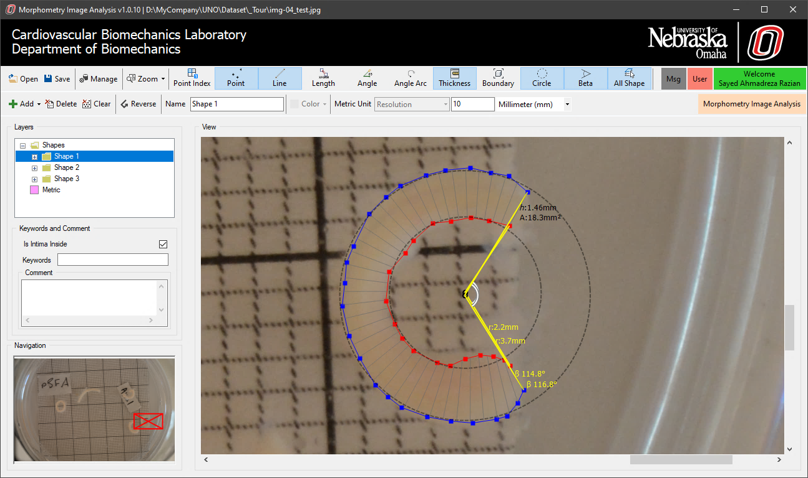
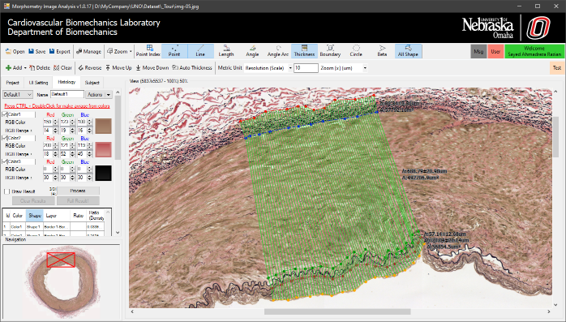
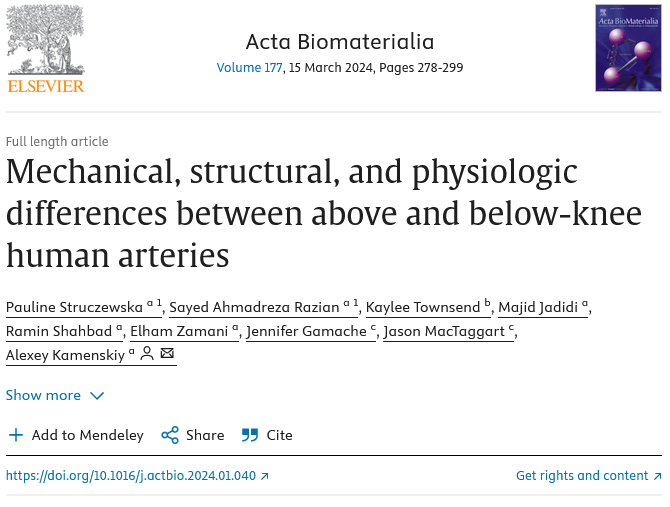
Developed C# software utilizing OpenCV for image processing to analyze soft tissues and extract features from arteries such as best circle fit, thickness, area, perimeter, opening angles, density, etc. This work aimed to improve the quality and accuracy of research. The software incorporated user and data management with SQL Server, offering an easy-to-use UI and UX for users. It was employed to analyze 10,000+ different arteries, 1,000+ muscle tissues, and collect 10,000+ data points from large-scale microscopic images (histology Ex. 30,000x30,000 px), supporting 10+ professional researchers online in a cardiovascular lab.
Paper Paper Paper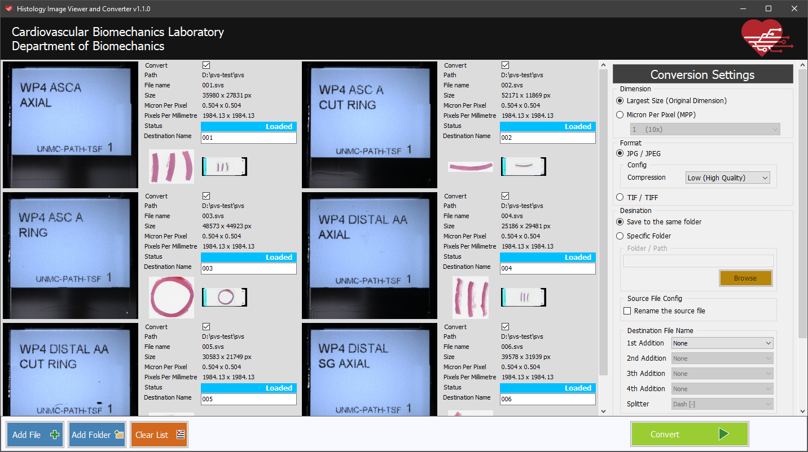
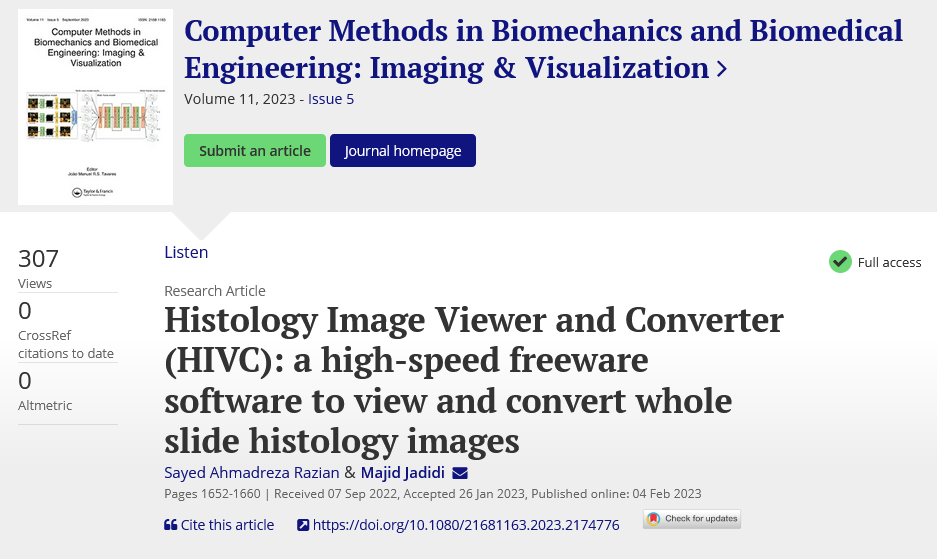
Developed a C# application to read, decode, and process large-scale tiled microscopic images (Whole-Slide Images (WSI)) of biological tissues from microscope scanners. This software efficiently converts and resizes images to high-quality JPEG and TIFF formats using multithreading. It supports high-speed batch conversion, ensuring high performance and quality.
Paper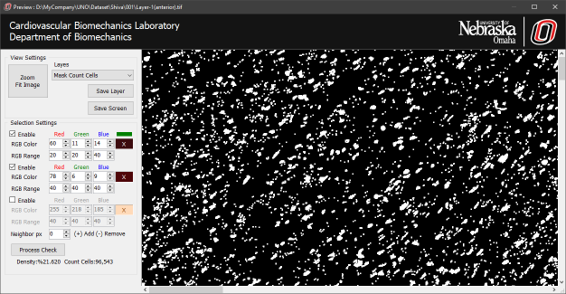
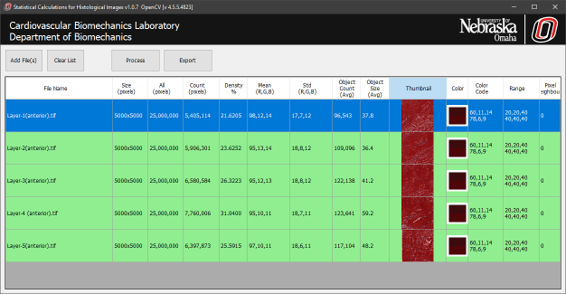
Developed a C# application utilizing OpenCV for analysis of large-scale microscopic images (histology) with an easy-to-use UI and UX for users. The software extracts key features such as density, pixel density merging, cell counting, and cell size in batch processes leveraging multithreading for enhanced performance. It also exports statistical results for research purposes. The software was significantly faster than ImageJ and other available software in this field.
Page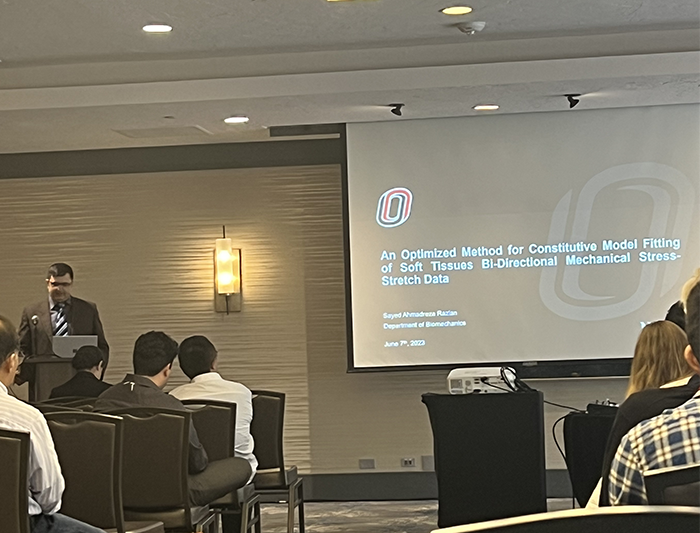
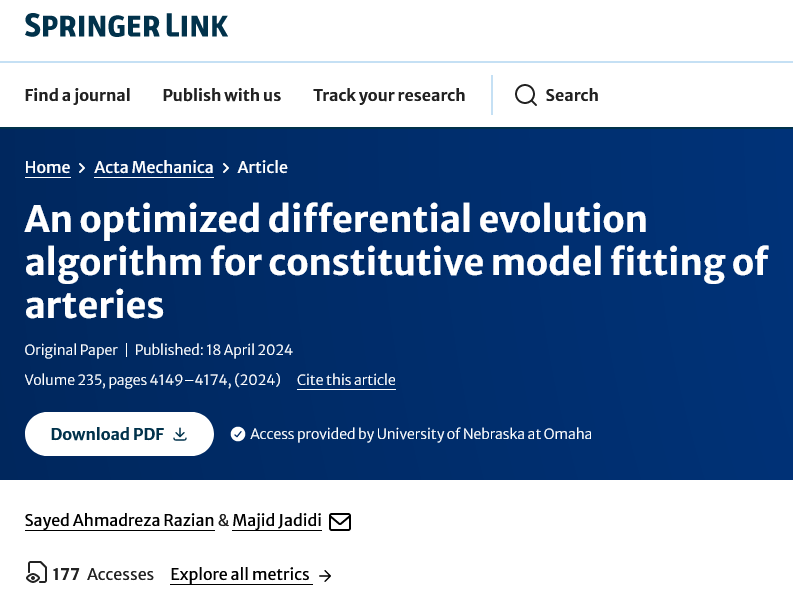
Developed and implemented an advanced optimization method based on Differential Evolution to enhance the quality of fitting and accurately identify optimal local minima and maxima. Applied this method to estimate parameters for four distinct constitutive models across 5,000+ biaxial mechanical tests of arteries. Utilized strong mathematical background to finalize and adapt the code for use in both C# and Python, ensuring flexibility and broad application.
Paper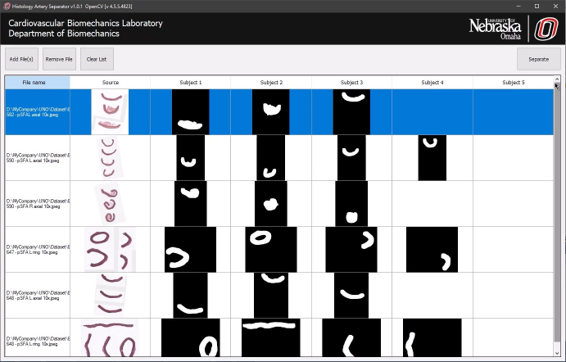
Developed a C# application using OpenCV to segment arteries in large-scale microscopic histology images with various stains. This software separates and saves images with consistent zoom and quality, ensuring no intersections. Leveraged multithreading to enhance speed and performance and included a user-friendly interface (UI) for ease of use.
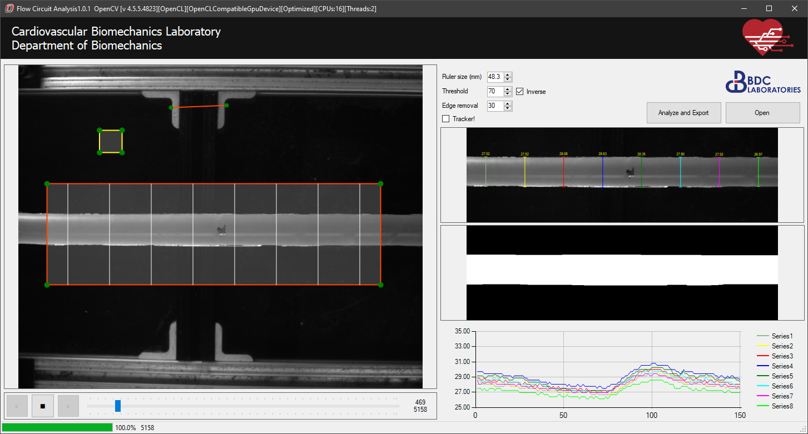
Developed C# software using OpenCV to analyze videos of flow circuits and measuring diameter changes in arteries (or stents) within a flow circuit tank during systole and diastole. Implemented an easy-to-use user interface (UI) for efficient operation and provided functionality for exporting diameter change data along the length of the artery (or pipe) in several points.
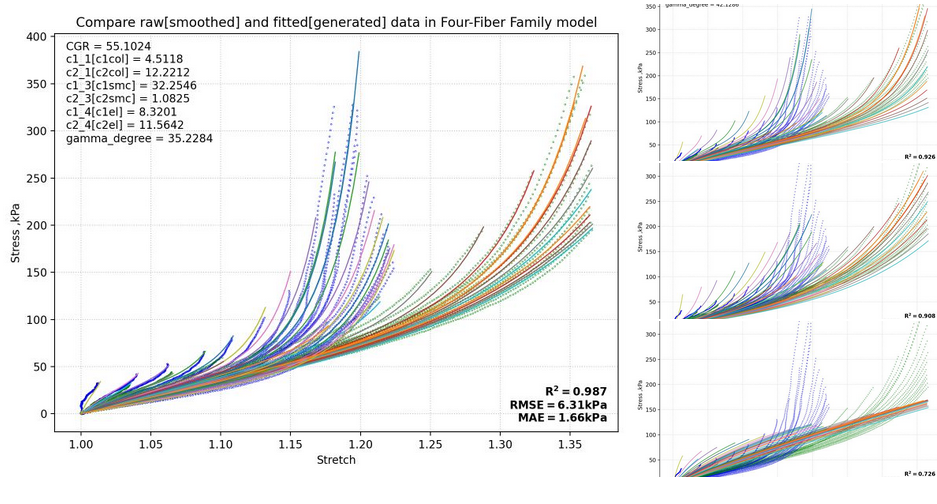
Developed C# and Python code to optimize the fitting of constitutive models for biaxial mechanical testing of arteries and soft tissues. Achieved improved model accuracy with reduced error, enabling precise simulation of arterial behavior within the body. This advancement enhances the design of grafts, medical devices, biomaterials, and pharmaceutical solutions, contributing to better research outcomes and clinical applications.
Page GitHub Paper
Leveraged Python and NLTK to extract and analyze key features of 1,500+ patients and tissue donors from medical / health records, questionnaires from kins, and nurse observations. Developed comprehensive feature tables and performed feature matching to integrate and align with existing datasets, improving data relevance and analytical accuracy.
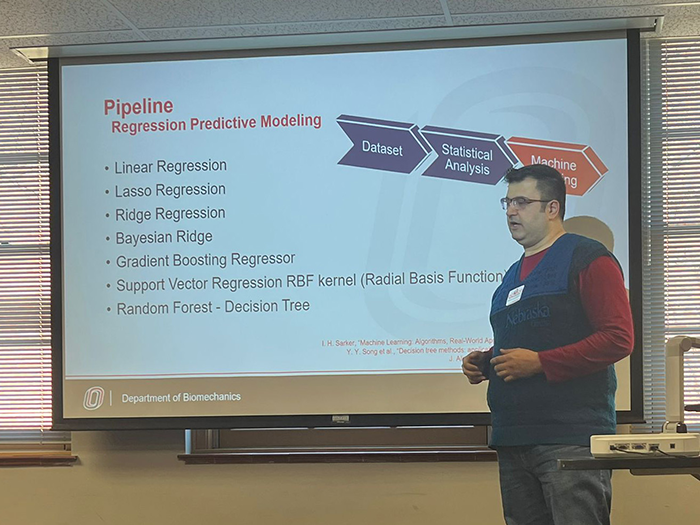
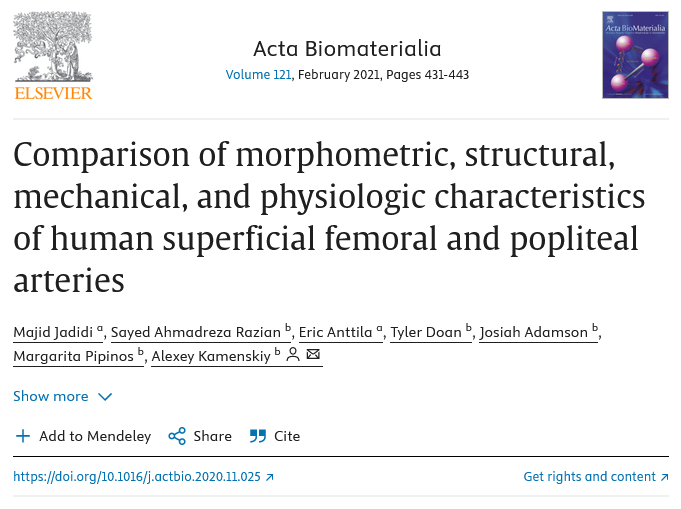
Developed a Python code using scikit-learn to accurately predict arterial diameter and thickness based on patient infographics and historical records. The model achieved an R² value exceeding 0.62, offering a cost-effective method for estimating the morphological characteristics of femoral arteries. This approach enhances the precision and efficiency of arterial measurements compared to traditional extraction methods.
Developed a Python code using scikit-learn to classify patient diseases based on the morphological characteristics of their arteries. The model utilized arterial features to identify and predict cardiovascular disease and risk factors, demonstrating significant relationships and enhancing predictive accuracy.
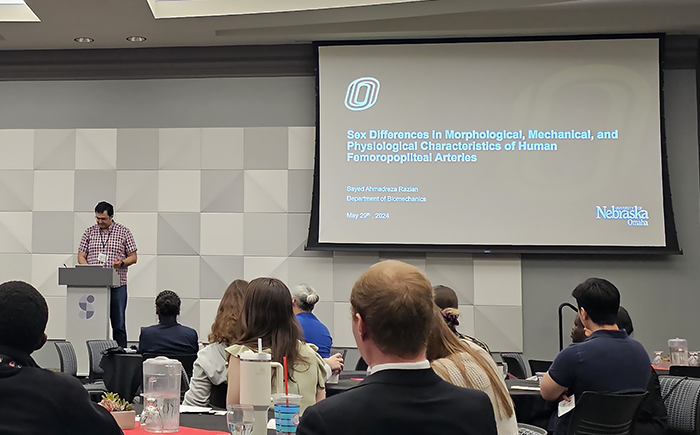
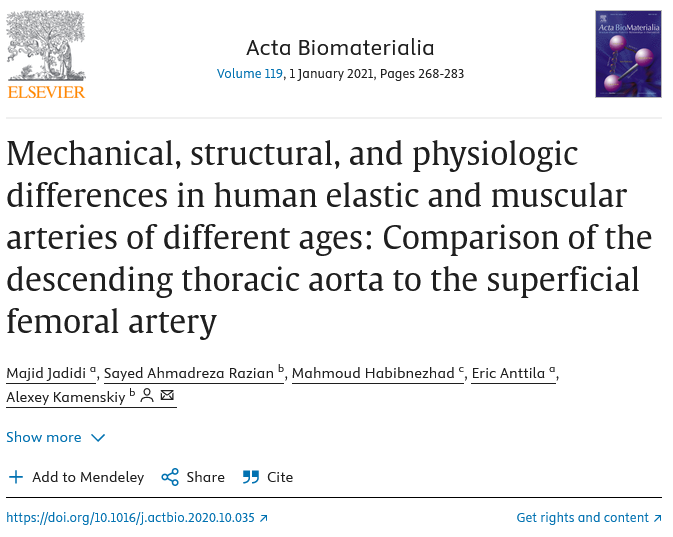
Conducted statistical analysis of arterial mechanical properties to assess differences across human subjects under various stretch and force levels for 1,500+ human subjects. The results provided insights into arterial behavior, contributing to the development of enhanced stents and medical devices for improved performance within blood vessels.
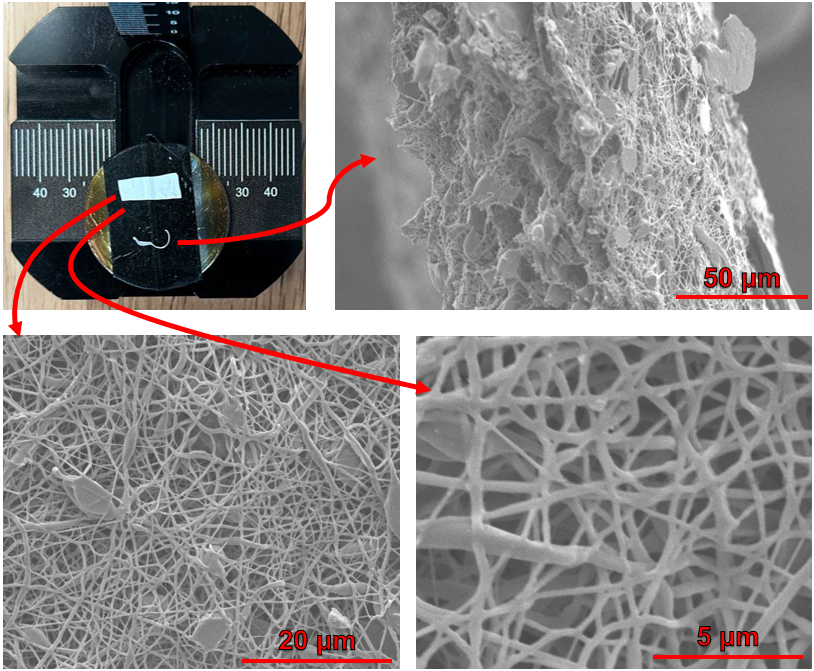
Conducted research in a biomaterial lab to create polymer nanofibers using electrospinning. Captured microscopic images and applied image processing techniques to extract morphological information. The study aimed to characterize the differences in the microstructure of electrospun biomedical elastomer-based polymer nanofiber fabric resulting from variations in process parameters.
PageNAFUN Electronics Co. | 2020 - 2021
Spearheaded the development and implementation of the company’s AI strategy, identifying key opportunities for integrating AI into products and services. Led the design and execution of real-time body movement detection for an Android app and developed a prototype for a natural language processing (NLP) chatbot tailored to a small and unique business model with Python (Django).
Microelecom Co. | 2018 - 2020
Designed and implemented a web scraping tool using C# and Python to extract data from 5 major e-commerce websites. Developed and maintained an SQL Server database to efficiently store and organize the scraped data for 20,000+ products daily. Created a local web application in ASP.NET for presenting and analyzing market data, delivering valuable insights and trends. Conducted comprehensive market research based on the collected data to identify profitable products for import, supporting strategic decision-making with visualization and predict important factors weekly such as price, count of sells, warehouse stock.
Leveraged natural language processing (NLP) to analyze customer comments, offering insights into product quality and performance rankings. Extracted key features from feedback for each product, enhancing the understanding of customer perceptions and product attributes.
Developed an intelligent model to enhance product suggestions for 2,000+ customers by recommending related items from different categories based on their current basket contents, improving cross-selling opportunities and customer satisfaction.
Developed a smart pricing model to estimate optimal selling prices for products by analyzing market trends, including average and minimum prices, as well as product availability, to maximize profitability and competitive positioning.
Aramin Information Technology Co. | 2012 - 2018
Developed several smart applications using C# (Smart Boards) and web-based technologies to enhance the quality of education in 100+ (per year) schools, educational institutions, and learning centers.
Designed a web-based platform to monitor student progress, facilitate teaching and grading for 10,000+ students and beginner teachers daily.
Assembled hardware 100+ (per year) servers and networks across local, private, and public networks.

© Razian.BioMDI.com. All Rights Reserved. Designed by HTML Codex